Standing in the kitchen before making dinner, I gather a fistful of thin green beans with purple stripes, place them on the cutting board and slice off the tips which roll, like discarded wood from our splitter, onto the counter. On the stove, water in a large cast iron pot simmers. When all of the beans are tipped I slide them, carefully, into the steaming water. Immediately they turn bright green. I lift the pot from the heat, pour the watery mix into a colander and the plunge the beans into a bowl of very cold water- blanching them. I lay out a clean towel and put the green, green-beans out to dry before freezing.
Paul comes in with the food processor and I turn to the cherry counter-top and the ceramic bowl filled with basil. The earthy smell fills the kitchen. I drag out the big jug of olive oil that I keep in the cupboard and bag of walnuts from the fridge. I take down another of the many beautiful maple cutting boards Paul has made for us and begin separating and cutting garlic cloves. Paul walks behind me and makes a “more…more” motion for the garlic.
I spin and chop until the food processor is brilliant green. Carefully pouring oil in until it is the consistency I like, I take my rubber spatula and push the now-pesto into small jars. I drizzle a bit of olive oil on top and close them. On the table sit stacks of jars and bags waiting to be transported to the downstairs freezers.
Such is harvest.
Bright red tomatoes, like baseballs, line the shelf along my kitchen window. I dream about simmering sauce. Here in our kitchen is where we set up our grow lights and where all of these vegetables began life. Now we return them to the kitchen in a large green wire basket.
There is a deep satisfaction in growing our own food, in creating a beautiful work of art on a plate and gobbling it down.
On the weekend we decide to head to the flea market. As we drive I notice how lush and green the foliage of the tree tops are. The river races alongside our truck and the mountains sit, purple in the shadows. I become aware of the new autumnal angle of the sun and how it falls across the grass of the fields. Everything looks full and alive. I turn to Paul and tell him that I think that the land looks healed.
After the third consecutive year of flooding in our area, the fields looked battered. Corn grew in patches, like sparse hair on the head of a man going bald. Even under bright sunshine there were muddy puddles. The riverbanks were tired from being pregnant, their spindly trees bending into the swollen waters.
Today I am struck by change, by what the land looks like when rested and content.
Perhaps I am lulled into a false sense of security by the beauty around me; pacified by this Vermont I have always known. Scars remind us of the lessons of wounds; we now know that we cannot predict or prevent, we can just take it all in, be grateful and prevail.
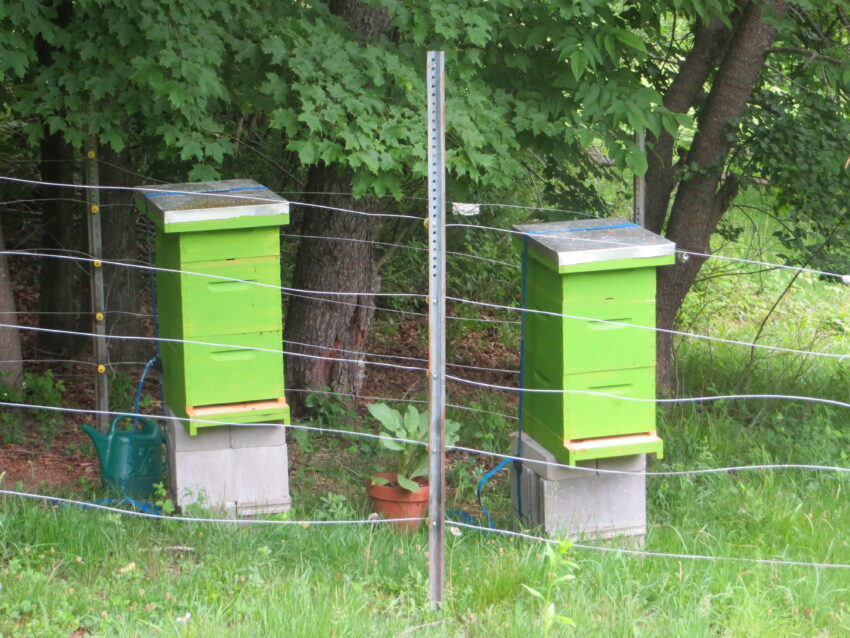
I double check the zippers on my beekeeping suit, pull my ponytail around front so as not to zip it in and join Paul who carries the smoker. We look like we are going to walk on the moon rather than extract three supers of honey from our hive.
Carefully and methodically we lift off the boxes and puff a bit of smoke to calm the bees, understandably pissed at someone robbing them in broad daylight. Our dogs wisely choose to lay at a safe distance as we load boxes into our wagon and drive them up to the extractor on our deck.
All afternoon we heft frames dripping with honey, uncap them and slide them into the extractor which sits bolted to our deck like an old fashioned shiny silver washing machine. We balance everything as much as possible and turn it on. It quietly rocks as it picks up speed and, as we peer inside, we see it throwing honey at the sides with centrifugal force.
Bees surround us and I keep a stick at the ready should one drop into the honey bucket. Paul laughs as I rescue a bee and drop it on the deck to lick its sweet wounds. I watch it slog around until it finally has its wings cleaned enough to lift into the air, a slow helicopter at best. We fill jar after jar with honey and affix our circular Too Fewe Farm sticker to each top. I take and stack them into my corner cupboard until it is full, and the jars, with their gleaming gold lids, stand in neat rows looking out at me.
I am tired. I am sticky. Everything is sticky. But I am filled, like those gleaming jars.
Lifting a seltzer from the fridge, I sit on a stool looking at our work and am struck by change, by what I feel like when I am purposeful and content and I realize that maybe I, like the land, am healed too.