One would think that after a seven month hard winter in Vermont, we would transition into spring with relative ease, that the unique green of the leaves would counter the endless white months. But, in Vermont, winter keeps its icy grip long after the bravest buds appear. As the calendar page flips over to June, we are still tossing a few pieces of maple into the stove at the heart of the kitchen to take the chill off.
Sitting on a stool eating breakfast I watch the mountainside slowly begin to change. Early in the season tulips put hands above their heads and dive forward through the earth toward the warming sun. The hill, as if in celebration, begins to look as if someone tossed a blue netting of forget-me-nots across it. I watch the chipmunks cutting a blue swath through on their way to forage.
Driving home from the grocery store I notice that the leaves overhead have knit together creating a lush, green overpass for us to drive under.
Slowly, things visible in the barren months begin to disappear from view. The bare trees around the pond allow us to watch otters play on top of the ice all winter. Sometimes locals will initiate a pick-up hockey game on one of the small inlets of the pond and, like with the otters playing, we slow down to watch as we pass.
Beginning in May the trees thicken and the Red Wing Blackbirds begin to call. Groups of birders, all in bucket hats with binoculars around their necks, gather in flocks. As we drive by they are all pointing and we crank our necks hoping to see what they see. If we are lucky we will spot Bald Eagles nesting. Perpetually in shadow, like daytime vampires, they hunch on old tree branches and oversee activity in the waters below.
In the winter months we can see the warm yellow glow of light in our neighbors house. Slowly this ability fades as trees fill until it completely disappears and we have to wait until they bring their toddler Maisie down the road to wave to our sheep before seeing again.
We spend our weekend hours planting: filling our empty greenhouse with compost and tomatoes until everything smells of earth. Kneeling to plant, the humidity curls the hair around my neck. Seamus peeks in the door keeping an eye on my whereabouts. Packets of seeds and months of plans fill the spaces. I’ve let go of the idea of straight rows and delight in popping broccoli plants between carrot rows. We water, we wait.
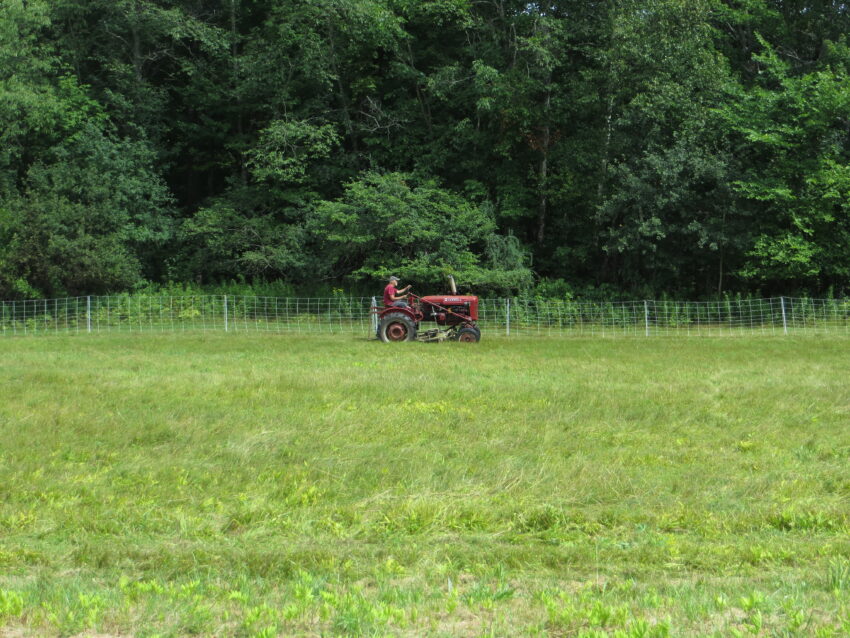
The pasture-grass waves in the wind and signals us that it is time to put sheep on it. When first put out they stand at the gate, like kindergartners waving goodbye to their parents at their first the taste of freedom.
In the far corner sits our bee hives. I watch them fly into the hive with their baskets yellow from the dandelions in the field. Above them the pear trees begin to blossom, soon followed by the apples. I hear the stream roaring down the mountain, its banks pushed out with the water from spring runoff. This is where our bees head when thirsty from work.
Drying dishes in the evening, I can see a mother robin sitting on her nest tucked under the eaves outside the kitchen. If I turn on the light, she looks directly at me, mother to mother. In a few weeks I begin to see both parents swooping in and out of the nest, like fighter jets, feeding their demanding young. I peer out and notice tiny beaks waving in the air, waiting to be filled.
Outside our shed is mounded a pile of wood, waiting to be split and stacked. As we drive down our dirt road we see the same pile in the driveway of other people’s houses. It is as if a clock has been set.
In Vermont, we watch our robins come, have their babies and leave, their nest empty, waiting for another spring. Peepers, our summer music. Fireflies light up the field when the evenings are warm. But as August hay arrives, the pond quiets and the fields darken again. Twilight in June is the apex of bird song, the Hermit thrush being my favorite. It calls from the dark of the deep woods on the mountain side, the sound feels like a spring breeze wafting over me.
And, just as true heat arrives, we begin stacking wood.
In Vermont summer is, after all, one long preparation for winter.
Melissa,
I just learned that your Mother has passed. I am so sorry. I have a cousin at the Gary Residence and while visiting Maryjean, I would invite Carol to join us for a sweet and a laugh. I met your Mother when I helped her sell her Wildersburg Condo and kept in touch while she lived at Chestnut Place and then Gary.
Your Mother was remarkable- always upbeat, beautifully dressed and possessed of positive spirit that was infectious.
I’m am sorry for your loss and will keep her in my prayers. Knowing Carol has made my life a bit brighter.
Sincerely
Michael Calcagni